You can do plenty of things with a boat, and one of them is to just sit back and relax, and to just go fishing. While there are lots of ways you can fish on a boat, you still have to think about getting your boat to your favorite fishing spot. You better know what you’re doing, if you’re the one doing the driving. If you don’t know how to drive a fishing boat, you have a problem!
What Kind of Boat Will You Deal with?
There actually lots of different types of boats on which fishing is a distinct possibility. These include:
- Cuddy Cabins Boats. This is a family-friendly boat with a closed deck over the bow of the boat. This type of boat is at least 4.75 meters long (or about 15.5 feet long). Navigation’s is quite easy and you get nice storage space.
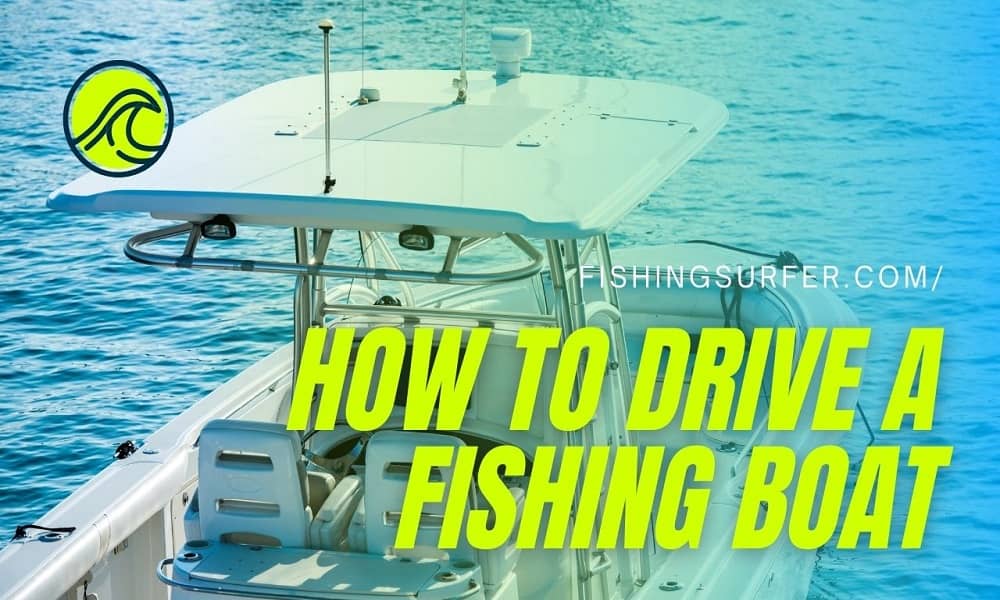
- Center Console Boats. The name refers to how the helm station is in the middle of the boat. This doesn’t have a cabin or fore-deck, but it’s ideal for sport fishing. Usually, you have gunwale rod holders, bait wells, fish lockers, outriggers, and even a powerful insulation system for icing the fish storage.
- Pontoon Boats. This boat is mainly for small inland waters, as it has a flattish shape with pontoons (tubes) to keep the boat afloat and stable. This is usually 15 to 30 feet long.
- Game Boats. These are bigger boats with powerful engines, and made with fiberglass. They’re great for pursuing game fish, like marlin and tuna.
Of course, who’s to say you can’t fish on cabin cruiser boats, trawler boats, and even huge houseboats?
In general, though, a boat that’s specifically meant for fishing will be designed to be stable and strong. Many of the all-purpose fishing boats come with a trolling motor system with outboard power. You also have live wells and rod lockers.
How to Drive a Fishing Boat? (Educational Courses)
Be serious—a short article on the topic won’t suddenly make you an expert on driving a fishing boat. Driving a boat is actually a bit more complicated than driving a car!
The best way to learn is similar to how you learn how to drive a car—you take driving lessons. It’s especially crucial that you take boating safety courses, to minimize the risk. You can check out boating courses that are available near your location.
Quick Tips
Let’s assume that you’ve already taken the course, but you need a quick refresher. Here are some tips that you should keep in mind:
Know the Rules
Again, you better make sure that you remember what you’ve learned from all those courses. What should you do when you encounter another boat underway? Which boat has the right of way? You better have the answers to these questions.
At the very least, check out the International Regulations for Preventing Collisions at Sea (COLREGS),which you can find on the U.S. Coast Guard (USCG) Navigation Center website.
Download the USCG Mobile App
You can download the USCG Mobile App, which can be a lot of help. The app gives you the latest safety regulations, and also the navigation rules. You’re even able to use it to file a float plan and to check your safety equipment.
Share Your Float Plan
You should use the mobile app to file a float plan, and you should also share this float plan with a buddy. That way, if something happens to you, the float plan helps people to find you more quickly.
Basically, the float plan is just a document that gives info about your planned boating trip. Your float plan should have the following information:
- Name of boat
- Boat registration number
- Type of boat (power, sail, paddle)
- Boat size
- Boat color
- Year and make of boat
- Type of engine
- Unique features of boat (like a flag or wake board tower)
- Sound signals
- Visual distress signals
- Anchor
- Navigation equipment
- Charts/maps/radar
- Number/color of life jackets on board
- Boat operator’s name, address, and telephone number
- Number of passengers on board and name, address, and telephone number for each passenger
- Emergency contact information for everyone on board
- Day/time of trip departure
- Day/time of planned trip return
- The planned route
- Instructions in case of emergency
What If You’re an Absolute Newbie?
In that case, you shouldn’t even think about driving a boat. But what if, for some strange reason, you need to drive a fishing boat and there’s no one else to do it?
Follow these steps:
- Go through your pre-departure checklist.
- Run the “blower” before you start the engine, to make sure there are no fumes in the compartment.
- Push a button to start the engine, though in some cases this involves turning a key in the ignition.
- Find out if there’s a “kill switch”, which turns off the engine whenever you leave the helm. If you have it, clip the lanyard on a belt loop of your life jacket ring.
- Check that all your necessary gear (including safety equipment and fishing gear) is on board.
- If you have other passengers, check that they’re all there and that they’re ready to get underway.
- Remove all the lines that secure your boat to the slip or dock.
- Gently push the throttle forward to go forward. Pull the throttle back if you have to reverse from the slip.
- Gradually advance the throttle, to get the speed you want.
- Trim the boat (which means to adjust the running attitude) to match the current conditions.
- Pull the throttle back to slow down when you’ve reached your fishing spot.
Conclusion
It’s actually quite simple, but a lot of things can go wrong. That’s why you need to take the boat courses in the first place. But at least you have a better idea of how to drive your boat to your fishing spot, so that the real fun of fishing can begin!