If you’re new to fishing, it’s really important if you can talk to the other anglers in your town who also love the fishing as well. Go talk to the most experienced, and ask them questions like “What kind of fishing gear do I need?” Of course, we can get you started on the topic of your fishing equipment list.
It’s just that we can just give you a basic overview, because a lot depends on your area. Ask your fellow anglers questions about the actual fish species you can go for in nearby areas. Find out which lures and baits work best for those fish.
Just don’t them exactly where the prime fishing spots are. These folks have spent years knowing these secret areas, and they may not appreciate you asking them to give up those secrets they’ve spent time on discovering. But you may ask for general locations where you can find your fish.
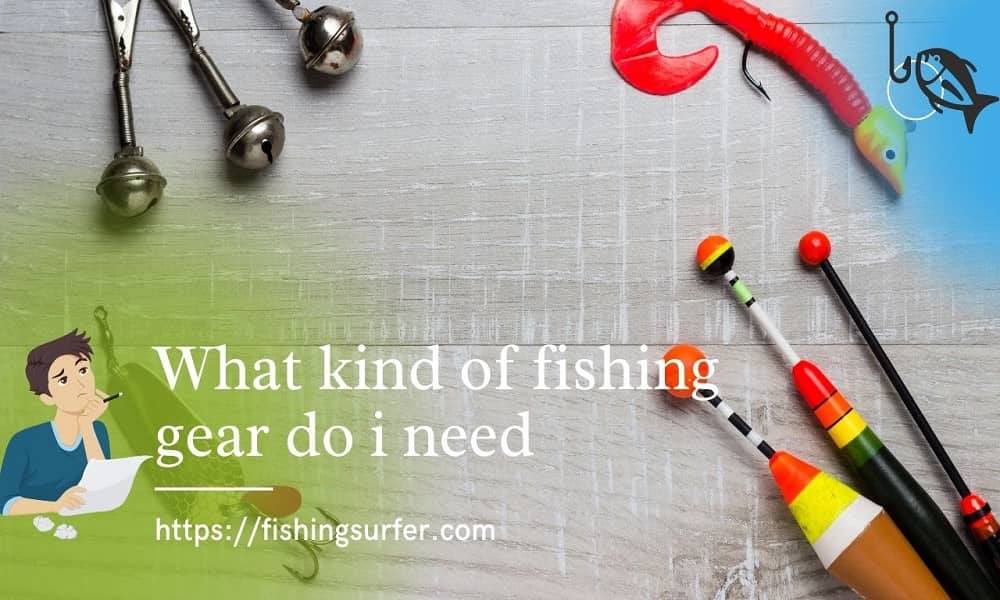
To get you started (and so you also have a better idea of what the old-timers are talking about), here’s a quick primer on the essential fishing equipment for beginners:
Fishing Rod and Reel
The fishing rod is that slender pole you use while fishing, while the reel is attached to it to let you wind your line.
The fishing rod can be classified according to several factors, like action (the flex of the rod when you apply force), power (the strength of the rod), and responsiveness (sensitivity). The type of fishing rod you get must have the characteristics that best suits the type of fish you’re targeting.
For a newbie, that’s a bit advanced (though fun to learn about). For the moment, you may want to start with something basic, like a medium action, medium strength fishing rod rated for 8 to 20 pounds. That should let you target a wide range of fish species usually found in lakes and rivers. Just get something that’s also responsive enough that you can feel it the moment you get a bit.
As for the fishing reel, start with the spinning reel (aka “open face” reel) first, before you try with baitcasting reels. You can use a spinning reel at a pier, from shore, or when you’re on a boat.
You usually get the fishing rod with the reel already attached, so you can ask your fishermen buddies what rod and reel combo they recommend for the fish in your area.
Fishing Line
Yes, you need this too, obviously. Your fishing rod and reel may even go with a free roll of fishing line. But it’s also a good idea to get some backup, as fishing lines can break or get caught in something in the water.
Again, you will have to ask your new buddies what kind of fishing line you should go for. The fishing lines differ from one another, according to such factors as their elasticity, castability, and even visibility.
When you go fishing, have a minimum of 100 yards of fishing line on your reel. If you’re fishing in clear waters, go with clear and thin lines so that the fish don’t notice them. If you’re fishing in rougher areas, then you may need a fishing line that’s stronger and heavier. Some newbies also like monofilament lines, as they’re easy to knot and simple to use.
Don’t forget to learn to tie your knots properly, and you learn through constant practice. You’ll have to know how to tie your line to your hooks.
Fishing Hooks
You may find yourself rather overwhelmed with the many different types of hooks available for anglers, so as a newbie you should just start with the simple single hook type. Try to avoid snelled hooks if you’re a beginner, as they may be too complicated.
With the single hook, you have a range of sizes starting from the smallest (number 32) to the largest (19/0). Your new buddies can tell you which size to get, depending on the fish species in the area.
Live Bait
Live bait is one great option to get the fish to bite, and you can buy worms and minnows (which are tiny freshwater fish that bigger fish eat) at your local bait shop. But you can also use other alternatives like flattened bits of bread, small pieces of hot dog, marshmallows, and corn.
Of course, you can try to find worms in your backyard. Place the worms in a tin can filled with some soil and grass. Put the tin can someplace dark and cold, until you’re ready to use them.
Artificial Lures
These are commercial items that are designed to act like real fish in the water, so that they attract the fish you’re targeting. Again, you need artificial lures that act like the food your target fish normally goes after.
Even if you use live bait, it’s always a good idea to have artificial lures as backup. If you’re fishing for bass, go with plastic worms. The 2-toned plastic worms with a darker head and light color for the tail works nicely when the waters are cloudy.
In general, though, dark-colored lures work best for murky waters and cloudy days. For clear waters and sunlit days, go with brighter colors.
Bobbers (aka Floaters)
As the name indicates, these things float and bob on the water surface. They keep your bait near the water surface, and also tell you when you get a bit because they sink beneath the surface. When you see this happen, it’s time to reel in your fish. It’s crucial that you don’t get bobbers that are too large, as they may not go down into the water when you get a bite.
Some bobbers are made with the traditional cork, but you can find plastic ones too. The round bobbers are easy to attach to your fishing line, but they may shorten your casting distance. There are the more elongated slip bobbers you can use, which can slide up and down the line easily and can let your fishing hook go deeper into the water.
Sinkers
You attach a sinker on your line for greater stability. That’s because your hook and bait both don’t weigh much, and the sinker gets them deeper under the water surface. You’ll want several sinkers on hand, since it’s very easy to lose one during extended fishing adventures.
Traditional sinkers were made with lead, which may not be too eco-friendly these days. But modern sinkers are now made with steel, tungsten, brass, and even bismuth. You’ll have your choice of different weights and shapes, and these factors can determine the depth of your hook.
As a newbie, you should try small split shot sinkers. These are tiny round sinkers you’d have no trouble clip on and off your fishing line. It lets your elongated bobbers stand up in the water too.
Swivel
This works as the attachment between your bait and your fishing line. This lets your bait to move more freely, especially when you’re using live bait. It also keeps your baits and lures from causing your line to turn so that your line gets all twisted.
There’s a loop on each end of the swivel, but you should put in a snap to make it easier for you to attach your lures, baits, and lines. The snaps can break especially if you’ve got a big fish to reel in, so you should go with premium swivels since they’re not all that expensive.
Castable Fish Finder
You may as well let modern tech help you out, so that you’re not wasting your time. A castable fish finders uses sonar to tell you if there are actually any fish out there. They’re not all that expensive either. Just cast your fish finder along the bank of the lake or river until you’re able to confirm the presence of actual fish.
Needlenose Pliers
You may need a pair of pliers to take out the hook from the fish, so you don’t get cut from the end of the hook or from the teeth of the fish. You may even find pliers specifically for fishing, as the tip is already bent and angled for easier hook-pulling.
Make sure you get stainless steel pliers for corrosion-resistance. After all, you’re working near the water. You may also check out pliers that can cut your fishing line, in case you have to deal with a snag.
Tackle Bag
Obviously, you need a bag to put everything in. But you can’t just use any ordinary bag, because you need compartments for all your tiny pieces of gear. Your bag should have compartments so they don’t mix and you’re able to find what you need quickly.
With your tackle bag and your fishing gear inside, it’s time to have fun fishing. Good luck—you’ll always need that, too!